
Recycling 1 ton of paper saves 17 trees, 7000 gallons of water, 3.3 cubic yards of landfill space, 2 barrels of oil, enough energy to power a house for 6 months.
The Belfer Research Building is a research-focused building that opened its door in January 2014 as a state-of-the-art facility for cutting-edge, translational science to accommodate Weill Cornell's basic, translational, and clinical research needs. This 18-story building achieved LEED Gold certification and is WCM's first LEED certified project. It was designed to bring reseacrhers together to share ideas and foster cross-disciplinary collabration.
With thirteen floors of laboratories, three floors of conference space, and two stories of research support space – a total of over 517,490 gross square feet – the building design includes provisions for natural light, ample yet efficient space design, the functional use of sustainable materials, and layouts that allow for and encourage communication.
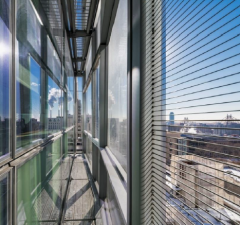
Belfer Building's glass curtainwall
High Performance Façade: The double skinned curtain wall with a chamberized design reduces thermal heat gain, provides glare control, and maximizes daylighting. The building envelope is comprised of two distinct high performing wall types. The glass curtainwall to the south is comprised of an outer layer of fritted glass that shades interior spaces along the building’s south wall. The south facade shading reduces cooling loads and admits evenly-distributed daylight into offices. The remaining three elevations are well insulated with 3” of continuous exterior insulation and are generally composed of a brick cavity wall with high performance glass & zinc ribbon windows.
Materials: The materials used for ground paving, terrace and roof have high Solar Reflectance Index (SRI), which reduces urban heat island effect. Secured bicycle storage and showers have been provided for employees, faculty and students. The selection of low chemical-emitting building and finish materials, as well as appropriate construction measures to prevent mold and mildew growth within the building ensure a high air quality, and thus occupant health, throughout the project. Materials within the Belfer Research Building were selected based upon several environmental criteria, such as high recycled content (acustic ceiling tiles, carpets, porcelain tiles), and whenever possible, local extraction and manufacture. Additionally, the majority of building woodwork was sourced from sustainably managed forests, and all materials were carefully selected for low emission of contaminants to maintain good indoor air quality.

Weill Cornell's media wall located inside the Belfer Research Building's main lobby. Credit: Richard Lobell
Spaces: The open, innerconnected spaces allow for light to pass through the building and allow for productive encounters to occur between scientists, students, and visitors to the building. The Welcome Lounge and Cafe provide students and researchers a place to relax, exchange ideas, and engage the public at the building’s street level. The digital media wall is a custom art installation piece and communication device unique to the Medical College. The media wall consists of thousands of high-resolution screens, each behind a lens module, that convey information at a variety of different scales – from exciting research and institutional news to microscopic images of what the research scientists are studying. One of the presentations on display focuses on the key sustainable design features of the building, along with energy saving statistics and LEED information.
Terrace: The stormwater harvesting system uses captured rainwater, not potable make-up water supply, for terrace planting irrigation. As is common in New York City, the tall buildings surrounding the terrace limit the occupants’ access to daylight. Rigorous studies were performed to analyze the sun’s behavior throughout the day and based on this analysis, a number of ‘sky masts’ are placed within the tree canopy of the terrace to reflect light at the human scale. ‘Ribbons’ which reflect light through a tectonic similar to the sky masts are integrated into the Hops Wall.
Water use: Low-flow fixtures including dual flush toilets help to greatly reduce the potable water demand. This reduces water consumption by over 40%. Stormwater is captured and reused for landscape irrigation, eliminating potable water use for irrigation. Cooling tower water use is significantly reduced by minimizing the volume of outdoor air conditioned for use in the building.
Mechanical systems: The building’s high performance envelope and carefullighting design reduce conditioning loads, which are then met with an efficient mechanical system design. The mechanical systems, including variable speed drives on the chillers, AHU fans, and pumps, air-side heat recovery, water-side economizer and premium efficiency motors on chilled water and hot water pumps, reduce the energy required to remove the large heat loads and condition the building. A number of advanced and energy-saving mechanical systems support the building. High-efficiency chillers and enhanced refrigeration management systems, a stormwater retention tank, and air handling units, using 100% outside air, support the advanced research throughout the building.