

We use 80,000,000,000 aluminum soda cans a year.
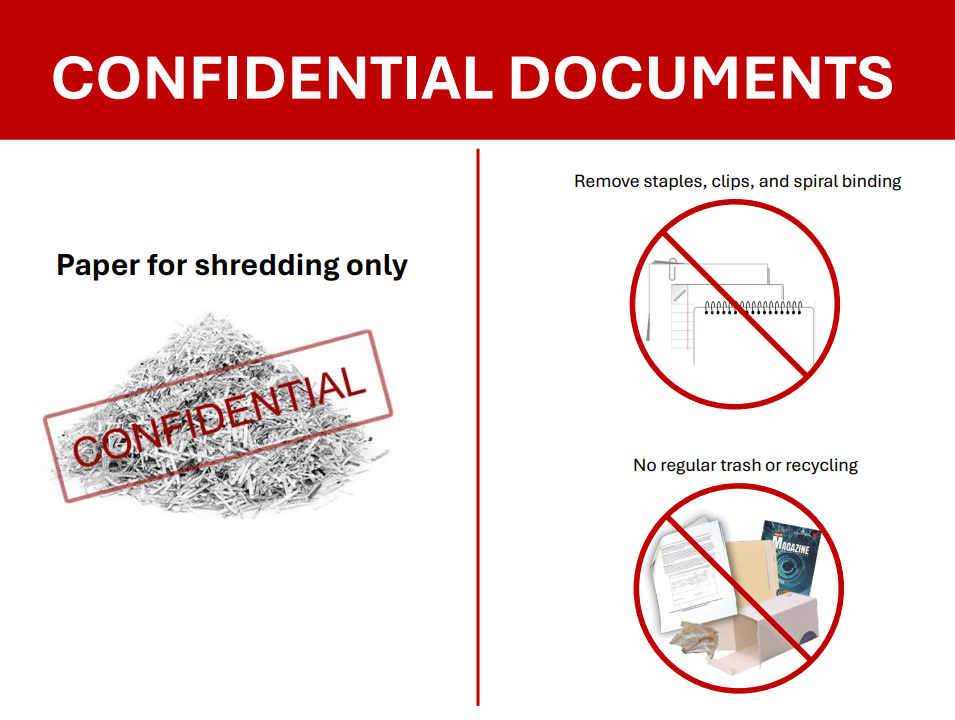
Please remember that in Weill Cornell Medicine's spaces confidential document bins are for confidential documents only.


Material placed in the confidential bins undergoes a special shredding procedure with an external hauler, which is more expensive than regular recycling. Extra costs are also incurred if objects such as clips, staples, and binding spirals cause the shredder to jam and require maintenance.
What goes in the confidential document receptacle:
- Confidential documents only: any document that contains patient-protected health information (PHI) or private information (including personal details, intellectual property, or anything confidential) that should be shredded to safeguard such information.
What is not accepted in the confidential document receptacle:
- Any object that is not paper - clips, staples, and binding spirals need to be removed.
- Any paper that does not require shredding:
- Non-confidential documents or papers, journals and magazines, cardboard boxes. These belong in the regular recycling bin.
- Tissues and napkins. These belong in the trash.
Download the Confidential Document bin Sign
Please note that things are different in NYP Hospital's spaces. There, you are encouraged to recycle all paper by placing it in confidential document bins. All paper will be securely shredded and then recycled. You'll recognize their bins by the label “Shred-It”.