
Fume hoods and -80 freezers can consume as much as 3.5 and 1 homes' worth of energy, respectively.
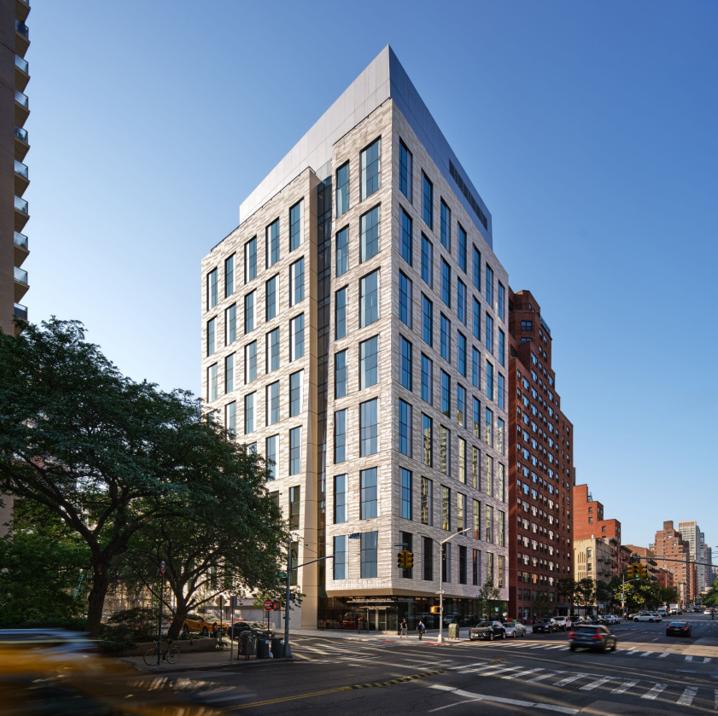
This new residence opened its doors to students in August 2025. With 170,000 gross square feet and 272 beds across a mix of unit types, prioritizing private studios, this building is WCM's first all electric construction and is pursuing Gold LEED certification.
The residence is conceived as a healthy, sustainable academic living environment. It fosters a strong sense of community through shared spaces while maintaining privacy within individual units.
Located at York Avenue and 74th Street, the building sits within a dense residential neighborhood. The design balances a clear institutional presence with sensitivity to its surroundings, engaging York Avenue’s active streetscape while responding to the smaller scale of 74th Street. Strategic massing and setbacks enable visual connections toward the core WCM campus.

Energy Efficinecy:
- A 29% reduction in energy use compared to a typical baseline building was achieved by high-performance glazing, an optimized façade, efficient lighting, and advanced HVAC systems. Smart controls and carefully balanced ventilation improve air quality while minimizing energy waste.
- The building uses high efficiency air cooled heat pump chillers located on the roof. These systems can provide heating, cooling, or both at the same time. Two main loops distribute energy as part of this shared water-based system:
- Residential water loop serves dorm rooms through two pipe valence units.
- Commercial glycol loop supports shared spaces and helps generate domestic hot water.
In winter residential units provide heating and commercial loop provides cooling where needed and supports hot water production. While in summer, residential units provide cooling and commercial loop provides heating for reheat and domestic hot water. Domestic hot water is produced using heat pump technology that recovers energy from the building loop, reducing overall energy use.
Water Efficiency:
- The landscape design achieves a 58% reduction in potable water use compared to the baseline through a combination of drought-tolerant and climate-appropriate plant species, limited irrigated area, and high-efficiency irrigation design. This strategy significantly lowers long-term water demand, reduces operational costs, and lessens the burden on municipal water and wastewater infrastructure while supporting responsible water stewardship in a dense urban environment.
- Indoor potable water use is reduced by 38% thanks to ultra-low flow faucets.
Recycling: Besides the mandatory collection of recyclable material and compost, the building provides an E-Waste Storage Area and battery collection (accessible 24/7 by the staffed security desk).
Sustainable transportation: The area strongly supports car-free living, with daily needs, healthcare, dining, and services all within walking distance. Exceptional access to subway and bus transit provides seamless connectivity across Manhattan and the region, while nearby parks and open spaces enhance neighborhood livability. Moreover a large bike room is available on the first floor.
Daylight: Over 67% of regularly occupied spaces receive strong daylight throughout the year, while direct glare and excessive sun exposure are carefully controlled. This is obtained through façade design, optimized glazing, and balanced floor plate proportions. The result is brighter interiors, reduced reliance on artificial lighting, and a more comfortable, productive environment for studying, gathering, and daily life.
